Oral Exam
A working AI oral exam, built to answer one question before engineering committed: can we run this for everyone? The team decided not to pursue it.
- Year
- 2025
- Track
- built
- Category
- prototype
The idea was an AI oral exam. A student answers out loud, and the AI examines and grades them. Students wanted it and leadership liked it. Nobody knew whether we could run it at our scale.
The first question was not whether it was good. It was whether we could run it. I decided to answer that with a working version, before engineering committed to it.
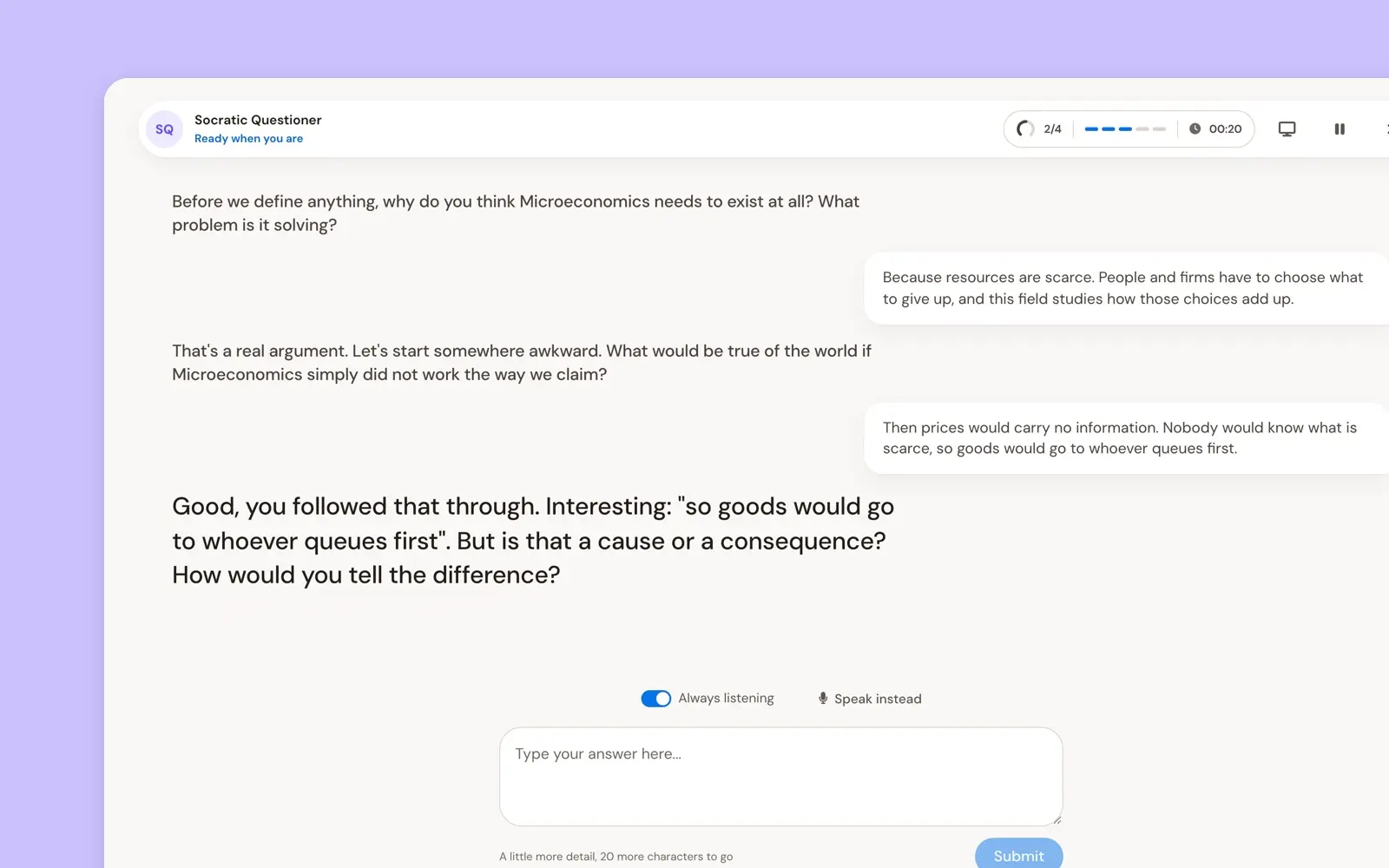
I built a working proof of concept on real AI models, with AI as my main collaborator. A student could speak, be examined and get a grade. It adjusted the difficulty as the student answered. After each answer it showed the professor's reaction, so you could tell whether it was pushing you harder or giving you more support.
The screens here are from a later version of the prototype, which asks scripted questions instead of calling a model, so anyone can open it.
The progress pill
5 states

A timed session counts down, and that is all it shows. There is no number of questions to draw.

Counted in questions, it draws one segment a question and fills them as you go. The clock counts up instead.

Past eight, the segments would shrink to dashes, so it says the count in words.

An open conversation has no end to count toward, so it shows the time spent and nothing else.

Once you have practised a course, it adds how many of its topics you have mastered so far.
It worked for one student. At our scale it did not hold. The hard part was speech. A student has to be able to cut in while the examiner is talking, so the system listens the whole time and streams audio back and forth. Around that sat preparing the right exam before it starts, and all the processing after it ends. The complexity of all of it, and the cost of running it, made it simply too expensive to build for the bet we were making.
I made the case to stop. Engineering reviewed the prototype and agreed, and the team decided not to pursue it. It cost a prototype.
I built it to check the experience, the complexity and the cost, and it did.
A prototype that kills an idea is worth as much as one that ships it.
Screens
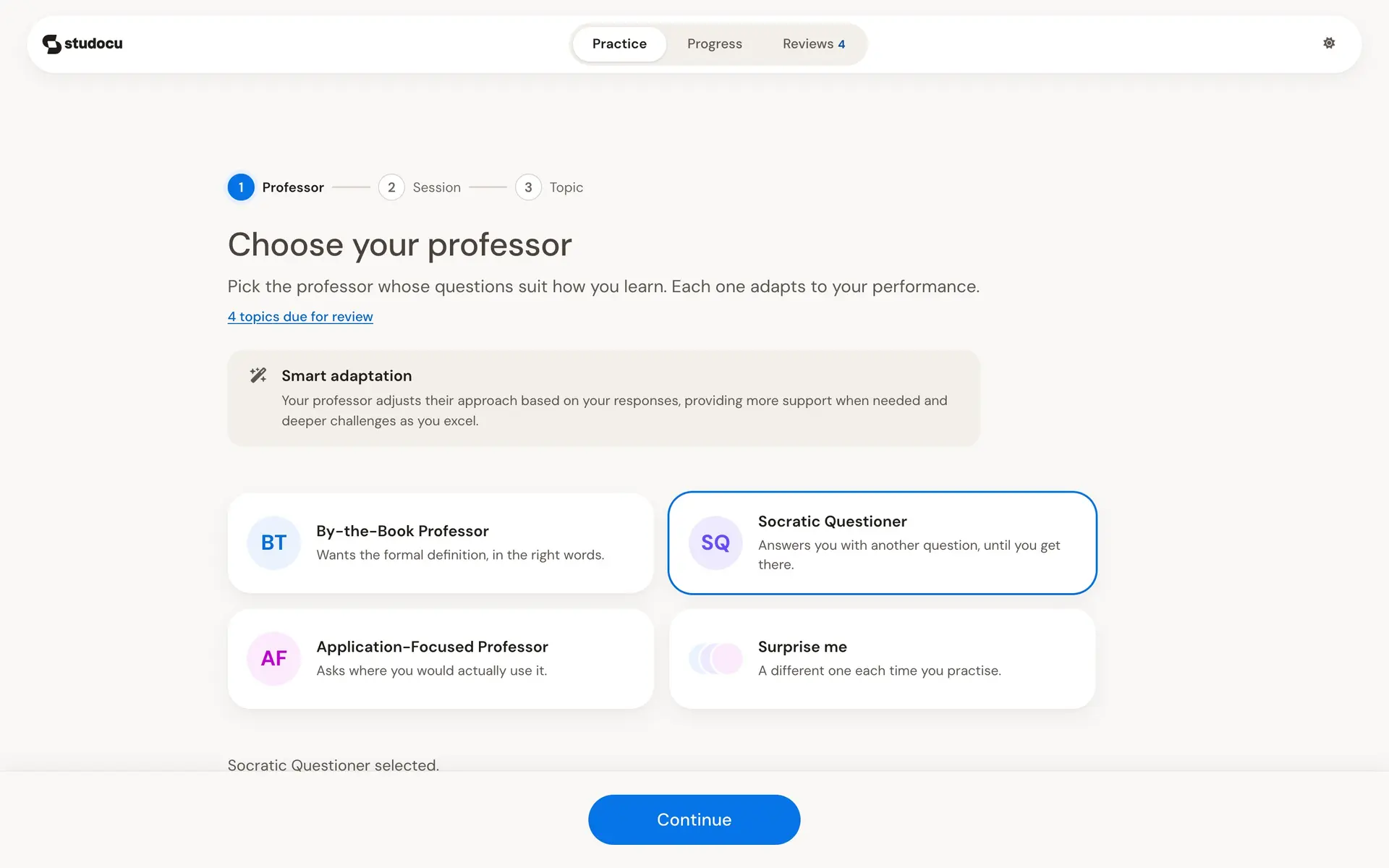
Prototype. You pick who examines you. 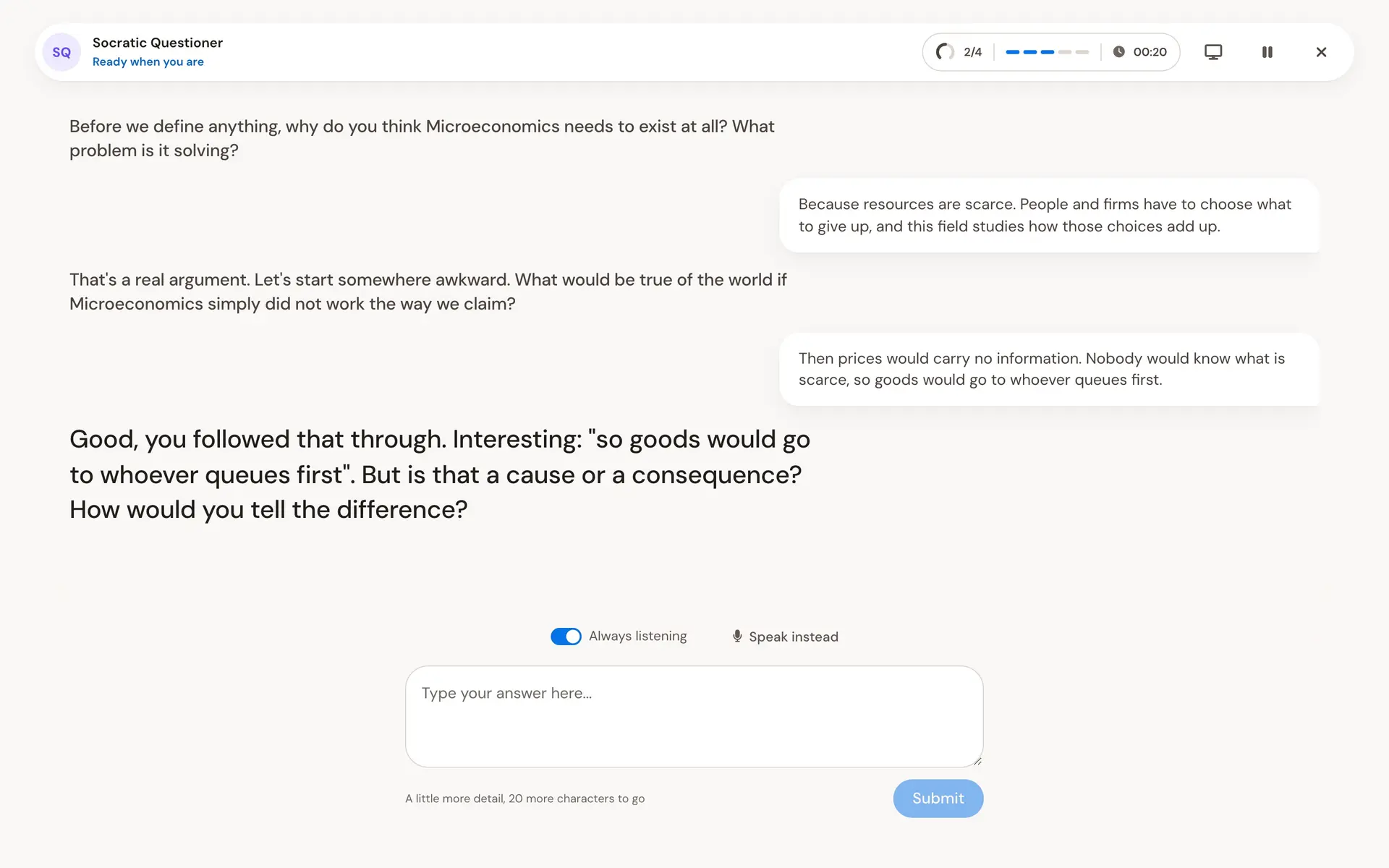
Prototype. The next question picks up the words of your last answer. 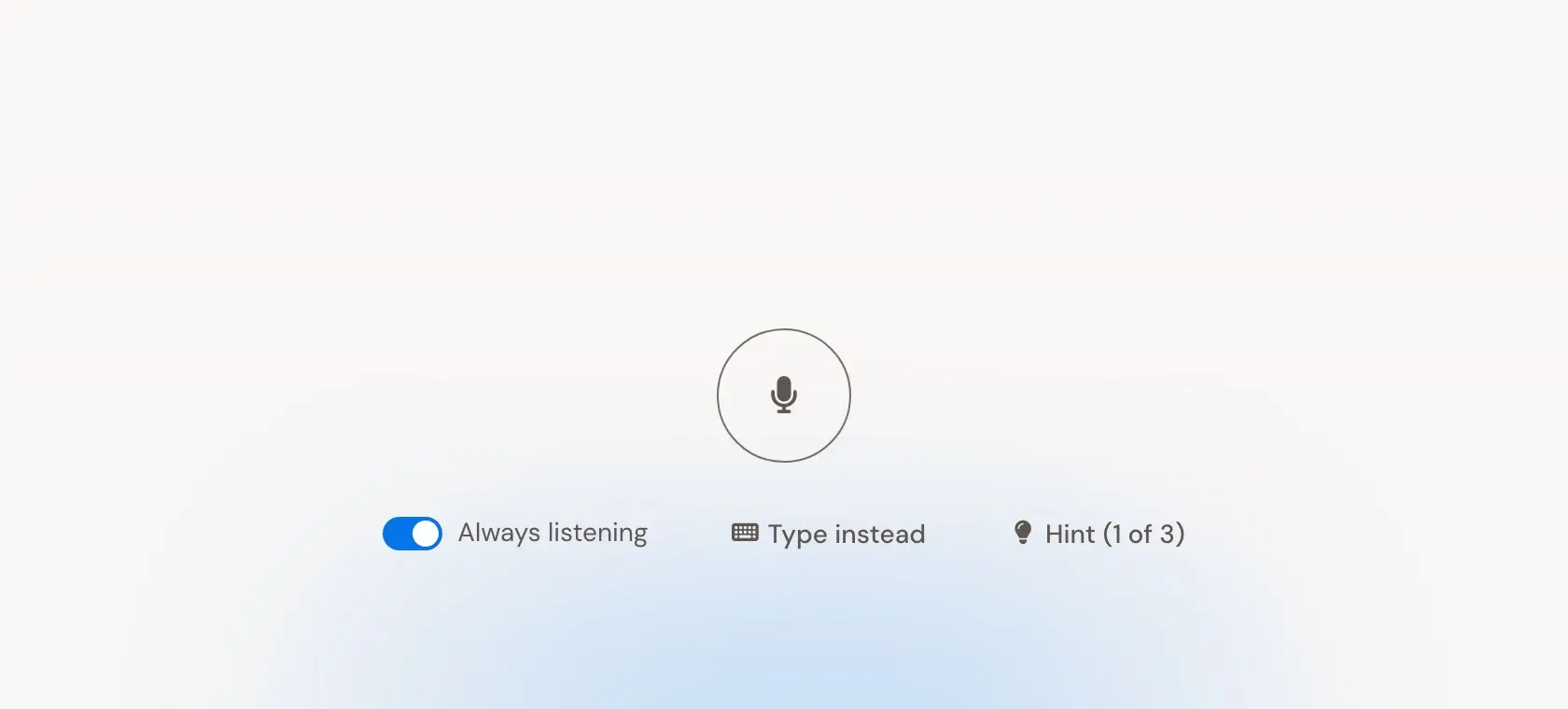
Prototype. While it listens, a light blooms under the microphone. 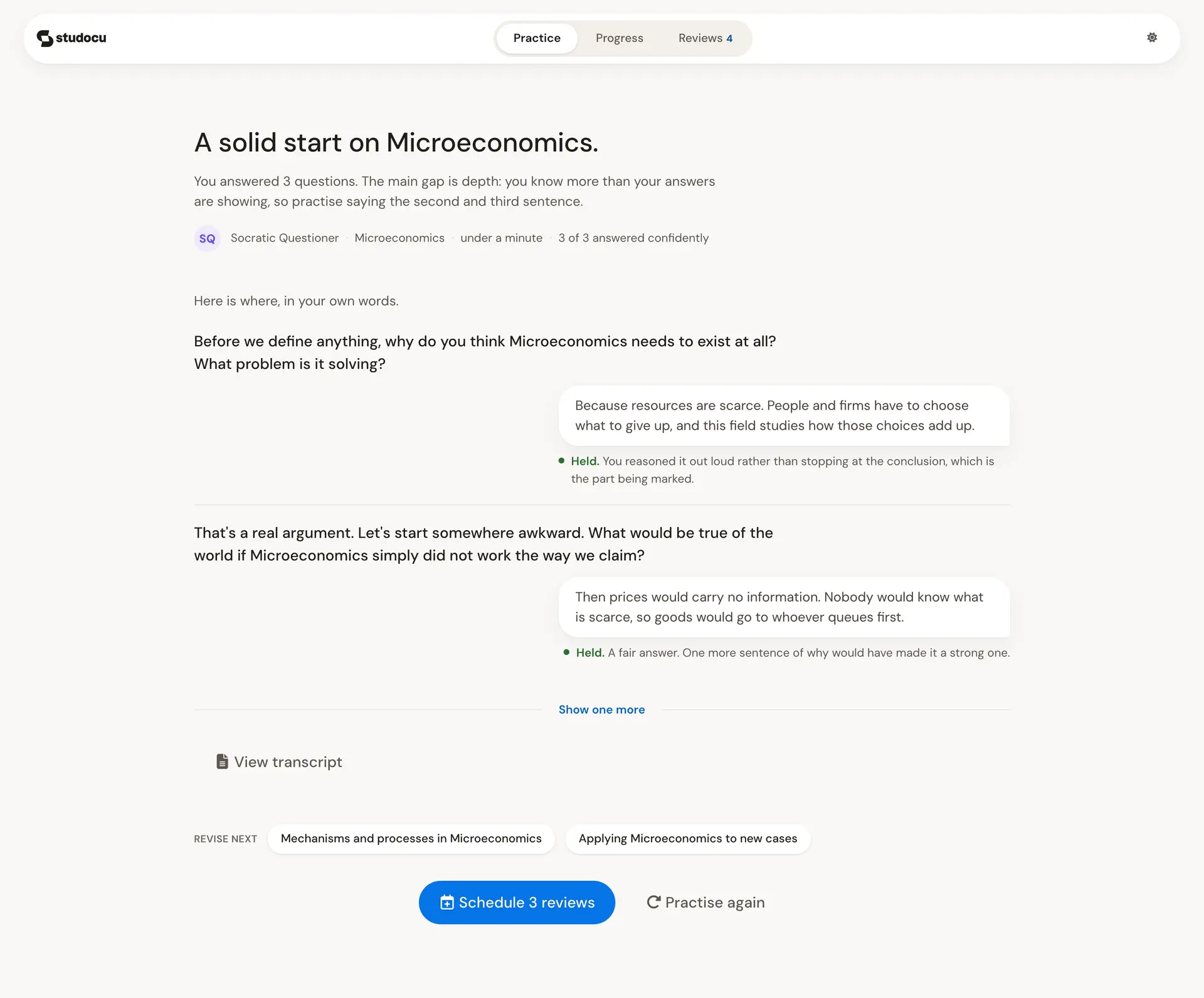
Prototype. The report is your own answers, with a note on each.
More prototypes
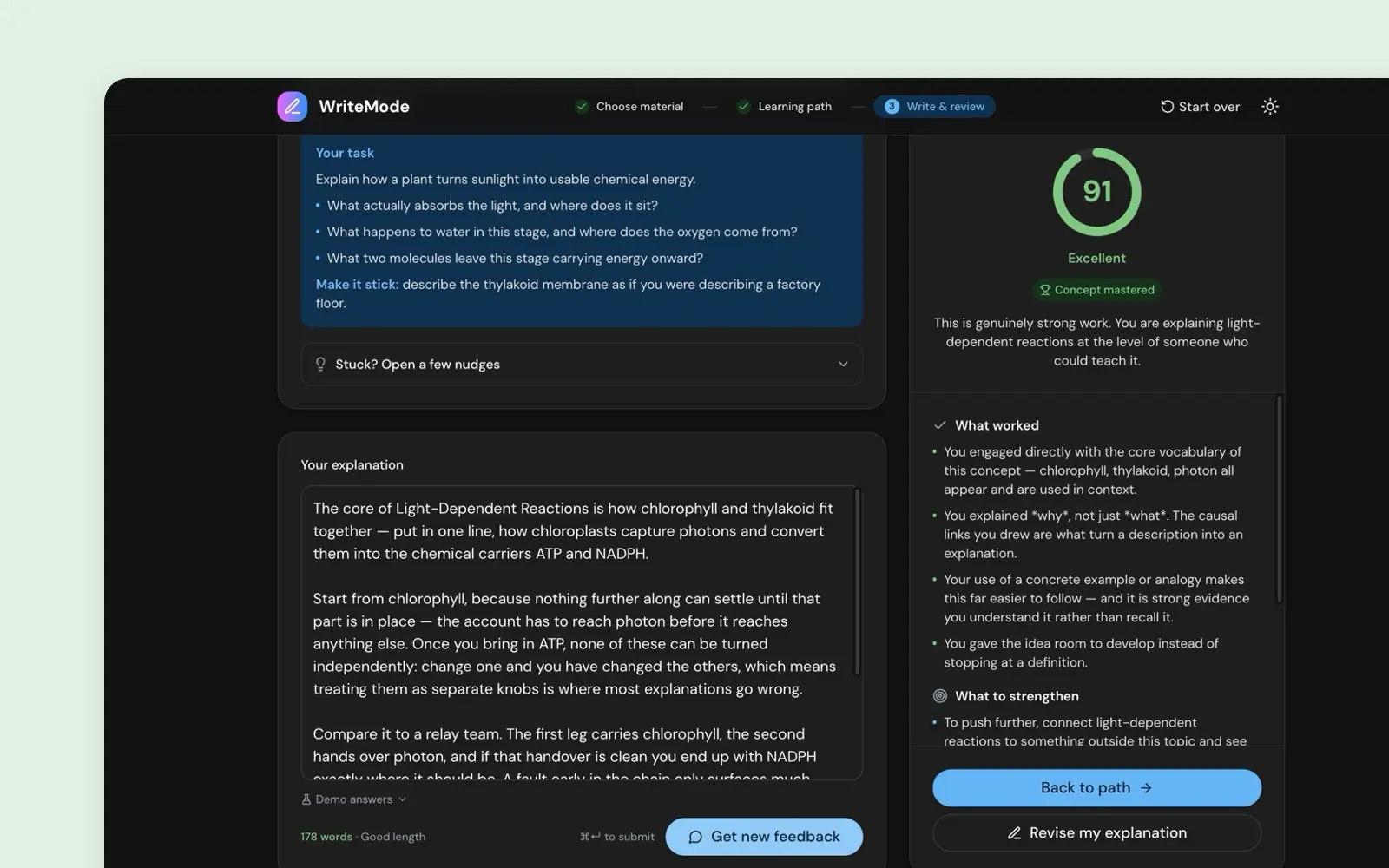
WriteMode
Hackathon winner. Working AI that reads your answer to an open question, tells you what is missing, and hands it back to try again.
prototype · 2024 · read it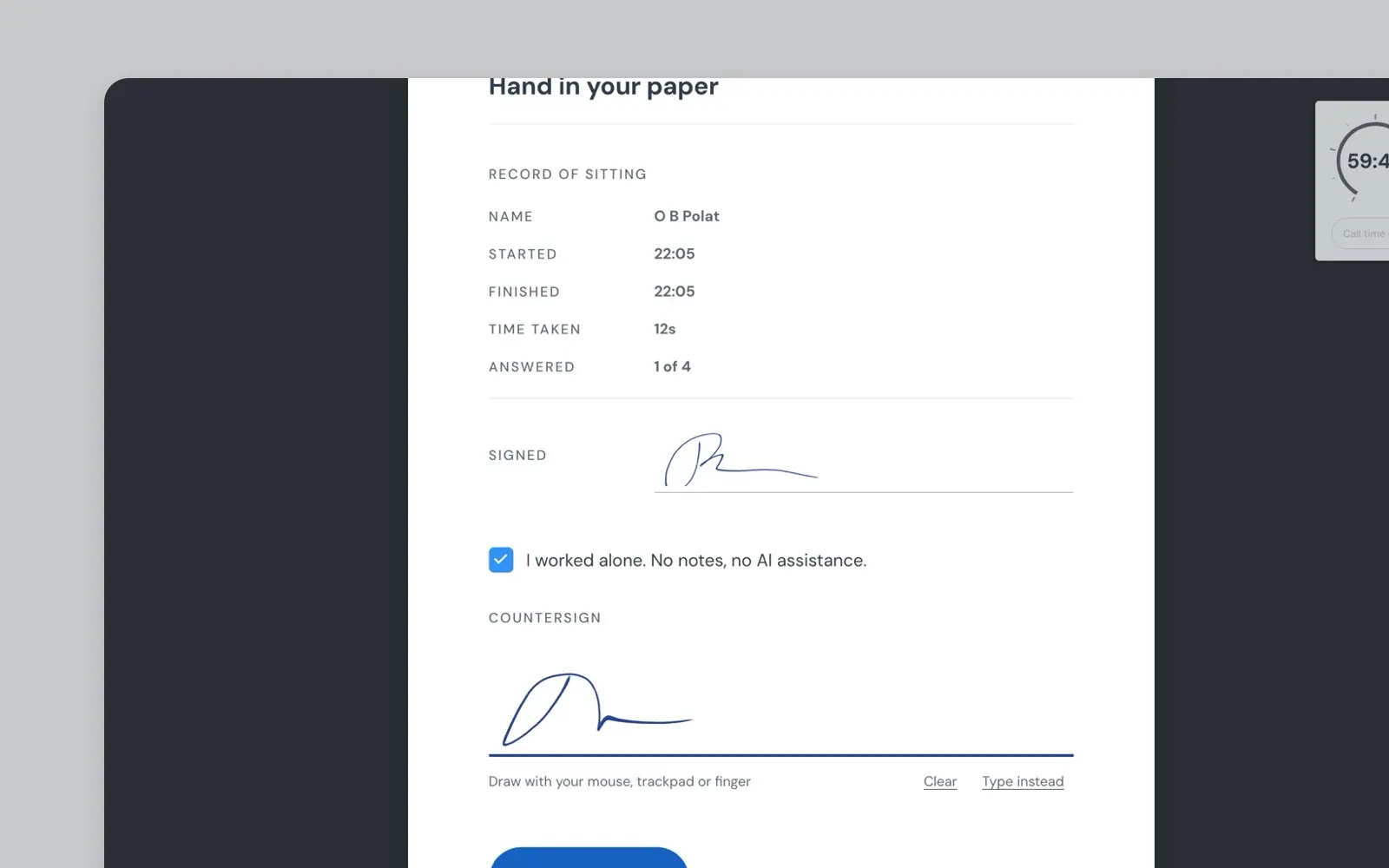
Exam Ritual
A cover page that turns a mock exam into a sitting: sign your name, set the clock, hand in the paper. Shipped to production and A/B tested.
prototype · 2025 · read it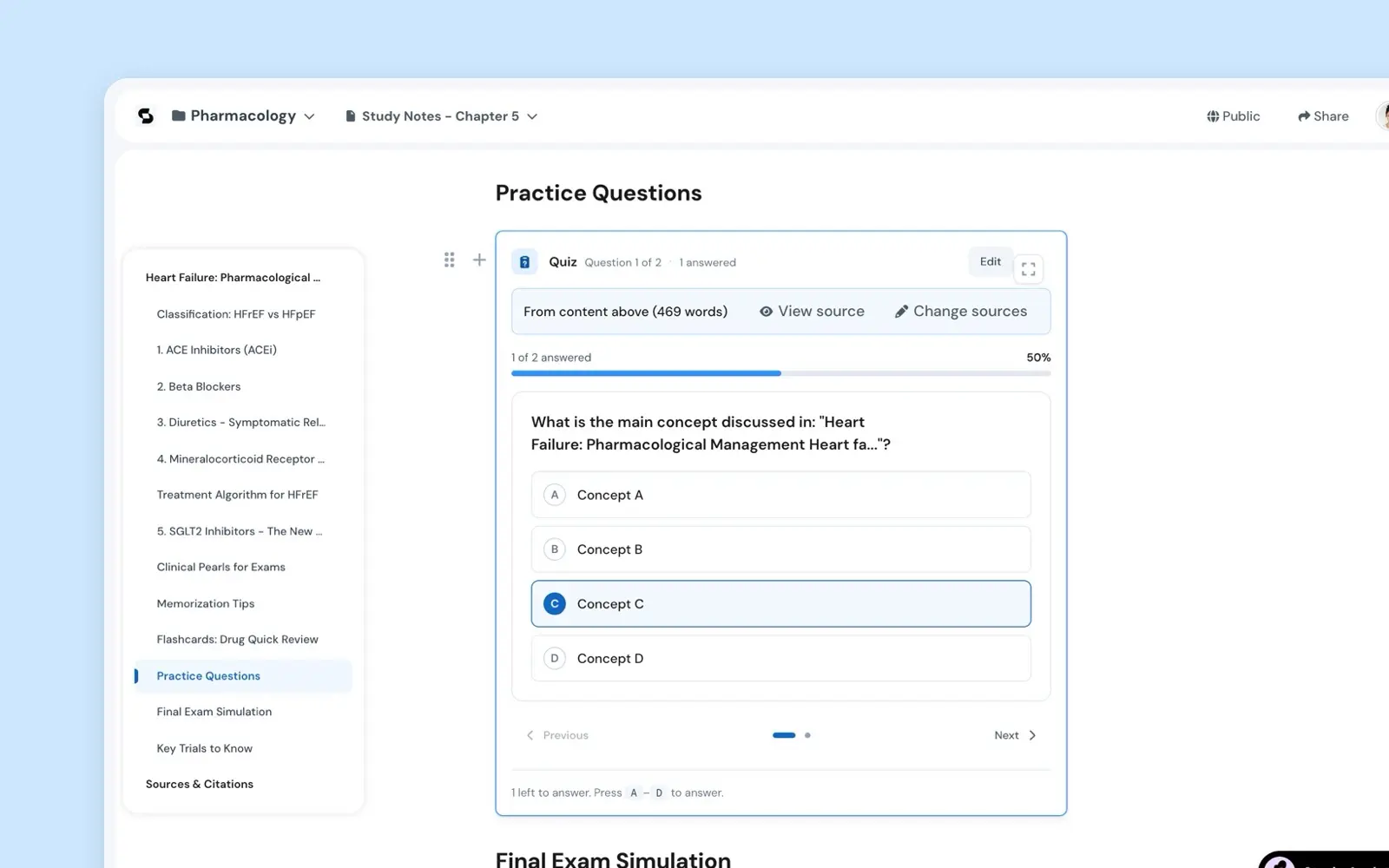
Inline Blocks
Students already build one master document. This puts the study tools inside it: a quiz, a timer, a transcript recorder, inserted as blocks.
prototype · 2025 · read it