Idea to AI Skill
session- audience
- A visiting student group from the University of Tennessee, hosted at the office
- date
adoptionAll participants adopted it
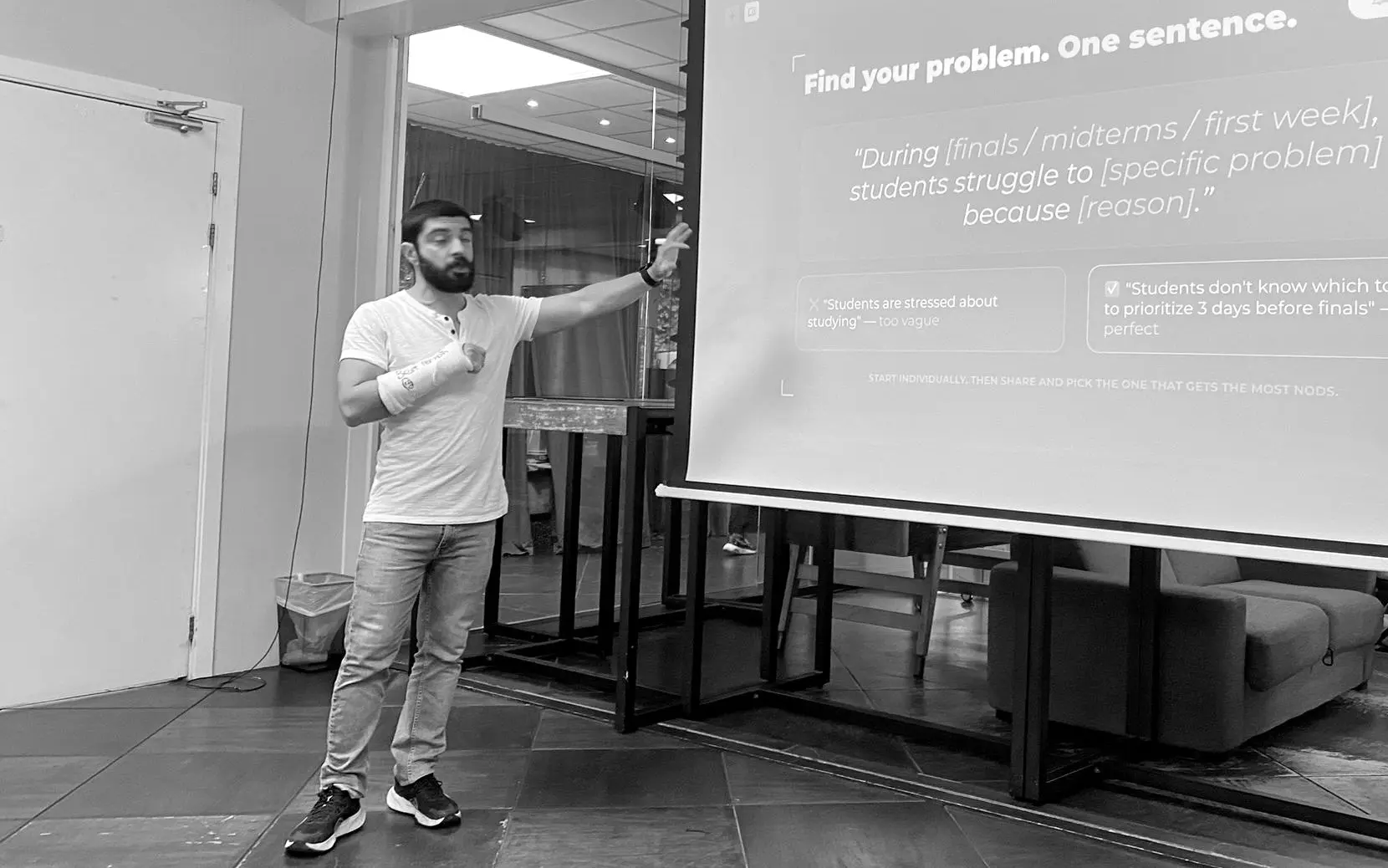
The workshop, condensed to ninety minutes for students who had never built anything, and run as a team competition: a safe space, a problem pick, a three field brief, a twenty minute build, and a peer vote.
The definition came first. An AI skill is one thing AI does, at one specific moment, that a student would actually use. One action, not a platform. Without that definition the room builds apps, and no team finishes an app in twenty minutes.
One sentence, then three fields. The problem had to fit a sentence with blanks in it: during a named moment in the semester, students struggle with a specific thing, because of a reason. Students don't know which topics to prioritize three days before finals was the good example. Then the brief is three fields, problem, trigger and boundary, and the test on the trigger is whether you can name the exact moment it fires.
One sentence
During a named moment in the semester, students struggle with a specific thing, because of a reason.
The good example
Students don't know which topics to prioritize three days before finals
Three fields
- Problem
- TriggerThe test: can you name the exact moment it fires?
- Boundary
Three rules for the build. Use the free tier, because speed matters more than sophistication. Build one screen, not an app. Hardcode everything, because fake data makes the concept visible now. The prompt was written in advance, so nobody had to learn prompting to take part:
promptshowhide
Build a single-screen UI for the following AI skill concept.
Do not build multiple pages or navigation.
Use hardcoded placeholder data, no real APIs.
Keep it simple, one clear interaction.

[PASTE YOUR BRIEF HERE]

Output: a clean, minimal interface that shows
what this AI skill looks like when it works.
If the output is off, simplify the brief first. The prompt is almost never the problem.
Two minutes, one question. Each pitch was twenty seconds on the problem, seventy showing what works, and thirty on how it would reach other students. The vote was a show of hands: would you actually send this to someone in your course right now?
Teams with no prior builder experience had working prototypes in about fifteen minutes.
And yes, that is a cast in the photo. Ninety minutes with one hand is a decent argument for keeping every build to one screen.